
Synopsis
In the cultural landscape of 2026, the concept of retirement has been redefined from a period of withdrawal to a phase of social resurgence. The process of elderly making friends at an advanced age is no longer seen as a rare feat but as a fundamental necessity for a fulfilling life. In India, where the Indian family system is shifting toward nuclear families, seniors are increasingly finding themselves in need of a peer-based support network that understands their unique life stage. By teaching technology to elders, we are removing the traditional barriers of distance and mobility, allowing them to discover local groups and interest-based circles with a simple tap on a screen. Many find that joining an elderly meetup is the most effective way to transition from the isolation of a large home to the warmth of a vibrant community. The underlying principle is that staying happy = healthy, as the emotional security provided by a true friend can significantly lower the risk of age-related health complications. This blog explores the psychological and social pathways to building new connections in your golden years, proving that the heart never loses its capacity for companionship.
Table of Contents
- Breaking the Myth: Can You Really Make Friends After 60?
- The Psychological Benefits of Peer Companionship
- How Nuclear Families are Changing Senior Socialization
- Teaching Technology to Elders for Digital Friendships
- The Role of Elder Meetups in Building New Bonds
- Why Staying Happy Equals Longevity and Mental Clarity
- Elder Special: Your Gateway to New Friendships
- Conclusion: Starting a New Social Chapter Today
Breaking the Myth: Can You Really Make Friends After 60?
There is a common misconception in India that deep friendships can only be formed in childhood or during one’s working years. However, the reality of 2026 shows that seniors are more open than ever to the phenomenon of elderly making friends based on shared values and current interests. Freed from the pressures of career and child-rearing, many discover that they finally have the time to be the kind of friend they always wanted to be. New connections made at this stage are often more intentional and less cluttered by professional rivalry, leading to a deeper sense of emotional safety.
The Psychological Benefits of Peer Companionship
Human beings are wired for connection, and this need does not diminish with age; in fact, it often intensifies as the immediate family gets busier. Having a friend who is going through the same physical or emotional changes provides a unique form of validation that children cannot always offer. Peer companionship reduces the levels of cortisol—the stress hormone—and helps prevent the “social rust” that can lead to depression and cognitive decline. When seniors share their stories and challenges with one another, they realize they are not alone, which is a powerful psychological tonic.
How Nuclear Families are Changing Senior Socialization
As the Indian family system continues to evolve, living in nuclear families has made independent socialization a survival skill for the elderly. While the love of children is constant, the daily social stimulation that used to come from a joint household must now be sought outside the home. This shift has encouraged seniors to look toward their neighborhoods and community clubs for meaningful interaction. Building a social circle independent of the family ensures that the senior remains a multi-faceted individual with their own life, interests, and “tribe.”
Teaching Technology to Elders for Digital Friendships
The digital world has become the new neighborhood park, making teaching technology to elders an essential part of modern aging. By mastering elders and mobile technology, a senior can stay connected with friends through WhatsApp, share memories on social media, and even join virtual hobby groups. These digital “bridges” often lead to real-world coffee dates and park walks, effectively ending the isolation of the solo senior. Technology doesn’t replace human touch; it facilitates the first “hello” that leads to a lasting bond.
The Role of Elder Meetups in Building New Bonds
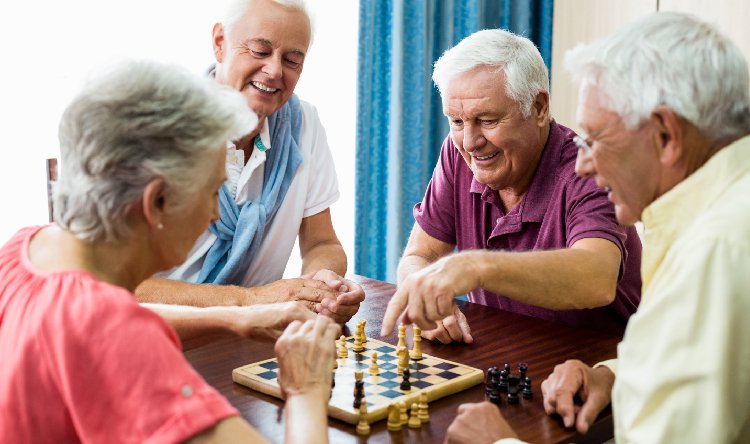
If technology provides the connection, then a physical elderly meetup provides the chemistry. These organized gatherings are designed to be low-pressure environments where seniors can interact through games, discussions, or cultural performances. In urban centers like Bangalore or Mumbai, these meetups have become the primary way for seniors to meet like-minded peers outside their immediate residential circles. They provide a sense of routine and something to look forward to, which is vital for maintaining a positive outlook on life.
Why Staying Happy Equals Longevity and Mental Clarity
We cannot overstate the fact that staying happy = healthy. Socially active seniors have been shown to have a 40% lower risk of developing dementia compared to those who are isolated. The joy of a shared laugh or a meaningful conversation keeps the neural pathways active and the heart resilient. By prioritizing their social happiness, seniors are making a conscious investment in their physical longevity. Friendship is not just a luxury; it is a life-saving habit that keeps the mind sharp and the spirit youthful.
Elder Special: Crafting Connections for Indian Seniors
The ELDER SPECIAL Group is committed to being the catalyst for new friendships among the senior population of India. We understand that the first step into a new social circle can be intimidating, which is why we curate our events to be warm, inclusive, and welcoming. Our brand is a symbol of trust for families who want their elders to lead an active, socially rich life. We believe that no senior should ever have to feel that their days of making “best friends” are behind them.
Our Unique Services and USPs
Elder Special offers a variety of platforms for elderly making friends, including our signature “Meetup Clubs” and specialized hobby classes. Our USPs include our expertise in teaching technology to elders and our dedicated “Host” system that ensures every new member is introduced and integrated into the group. We provide a social healthcare event calendar that focuses on the “happiness quotient” of our members, ensuring total well-being. By joining us, you are choosing a community that celebrates your past while helping you build a vibrant social future.
FAQs
Why is it sometimes harder to make friends at an older age?
Making friends at an older age can feel harder because we often lose the “forced” social environments of youth, such as schools or workplaces. Additionally, many seniors carry a fear of rejection or feel that they are “set in their ways,” which can make them more hesitant to reach out to strangers. Physical challenges or hearing loss can also make group conversations feel overwhelming or exhausting. However, once the initial barrier of hesitation is crossed, seniors often find that they have a lifetime of stories and wisdom that make them incredibly interesting to others. The key is to start with small, shared-interest groups where the focus is on an activity rather than just small talk.
How many hours does it take to turn a stranger into a friend?
Research suggests that it takes about 50 hours of shared time to turn an acquaintance into a casual friend and over 200 hours to develop a deep, close friendship. For seniors, this means that consistency is more important than a single grand social gesture. Attending a weekly elderly meetup or a regular yoga class allows these hours to accumulate naturally without it feeling like a chore. The “repetition” of seeing the same faces in a familiar environment builds the trust necessary for a deeper connection. Patience and a willingness to show up regularly are the two most important ingredients in the recipe for a new friendship.
Can introverted seniors successfully build a new social circle?
Absolutely, introverted seniors can and do build very successful social circles, often focusing on high-quality, one-on-one connections rather than large groups. For an introvert, smaller hobby-based groups like a book club, a knitting circle, or a gardening project are much more comfortable than loud parties. They may also find that digital platforms allow them to get to know someone through text or shared articles before meeting in person. The goal of socialization isn’t to become an extrovert; it is to find the level of connection that makes you feel seen and valued. Many introverts find that their ability to listen makes them very popular and sought-after friends in the senior community.
What are "Interest Groups" and how do they help in making friends?
Interest groups are small communities formed around a specific hobby or passion, such as photography, spirituality, traditional cooking, or bridge. These groups help in making friends because they provide an immediate common ground and a “neutral” topic of conversation, which reduces social anxiety. When you are focused on a task—like learning a new recipe or discussing a poem—the friendship develops organically in the background. It removes the pressure of having to “perform” socially because the shared activity does the heavy lifting. In 2026, many Indian seniors are using these groups to rediscover old passions and meet people with similar life perspectives.
How can a senior start a conversation with someone new?
Starting a conversation can be as simple as offering a genuine compliment or asking for a small piece of advice, such as “That’s a beautiful shawl, where did you get it?” or “I noticed you’re very good at this game, could you show me a trick?” Most people love to be helpful, and asking a question is a great way to let the other person open up. Sharing a small, relatable observation about the event or the weather can also break the ice. It is important to remember that most people at a social gathering are also looking to connect and are usually relieved when someone else makes the first move. A warm smile and an open posture are the most inviting social tools anyone can have.