
Synopsis
In the modern Indian family system, the “generation gap” is often viewed as a barrier, but in 2026, it is being bridged by a digital game board. For many seniors living in nuclear families, the challenge isn’t a lack of love, but a lack of shared activities with their tech-savvy grandkids. This is where intergenerational gaming comes in. Whether it is a classic game of Ludo King or a strategic match of online Chess, these digital interactions are creating rare opportunities for connection. More importantly, they provide the best “winning stories” to share during your elderly parents weekly meetings. This blog explores how gaming turns elders and mobile technology into a tool for family bonding and why these stories are the highlight of any senior citizen meetup groups agenda.
Table of Contents
- Beyond the Screen: Why Gaming is the New Family Bonding
- Ludo King and Beyond: The Best Games for Seniors and Grandkids
- Winning Stories: The Heart of Your Tuesday or Thursday Chapter Meet
- How Intergenerational Gaming Boosts Cognitive and Emotional Health
- Teaching Technology to Elders: Becoming a "Pro" with Grandkids
- Bridging the Miles: Gaming for Long-Distance Nuclear Families
- Elder Special: Celebrating Your Digital Victories
Beyond the Screen: Why Gaming is the New Family Bonding
For a senior, playing a game with a grandchild is about more than just the score; it’s about “shared time.” In 2026, mobile games have replaced the traditional board games that were once the staple of the Indian family system. These games provide a common language. When a grandfather “beats” his grandson at a game, it creates a moment of playfulness and mutual respect. It shifts the dynamic from the elder being a “caregiver” to being a “competitor” and a “friend,” which is essential for healthy, active aging.
Ludo King and Beyond: The Best Games for Seniors and Grandkids
The best games for intergenerational bonding are those that are easy to learn but hard to master. Ludo King remains a favorite in India because of its nostalgic value and simple interface. Other popular choices include Words with Friends, UNO, and Online Chess. For the more adventurous, games like Among Us or Scrabble GO offer more complex interaction. These lifestyle activities for seniors keep the brain sharp while providing a fun, low-pressure environment to engage with the younger generation’s digital world.
Winning Stories: The Heart of Your Tuesday or Thursday Chapter Meet
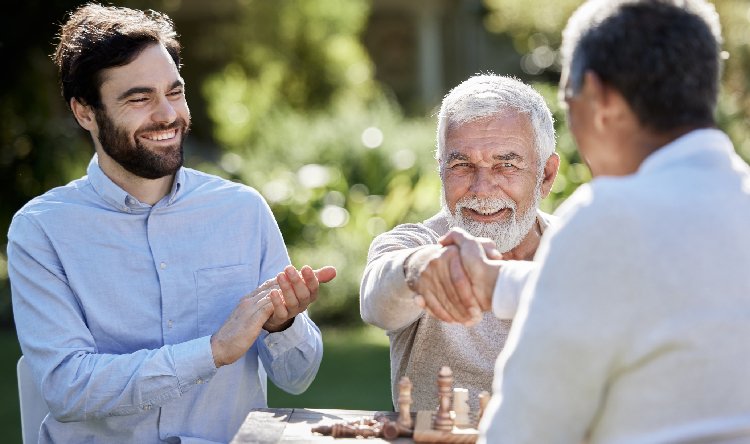
There is nothing quite like the pride of a senior sharing a “gaming victory” at their senior citizen social meeting. During our Tuesday, Wednesday, or Thursday chapter meets, these stories are the ultimate icebreakers. “I finally beat my grandson at Ludo!” or “My granddaughter taught me a new move in Chess!” are phrases that spark laughter and applause. These stories prove that you are staying current and active, making your elders weekly meeting agenda a celebration of your ongoing growth and family connection.
How Intergenerational Gaming Boosts Cognitive and Emotional Health
Research in 2026 shows that gaming with grandkids is a form of “Cognitive Therapy.” It requires strategy, quick thinking, and hand-eye coordination—all of which are vital for maintaining mental agility. Emotionally, it provides a sense of “Relevance.” In nuclear families, where seniors can sometimes feel left behind by technology, being a “Gaming Partner” provides a huge boost to self-esteem. It reduces the risk of depression and ensures that your social life remains vibrant both at home and at your senior citizen group.
Teaching Technology to Elders: Becoming a "Pro" with Grandkids
The best teachers for digital literacy for seniors are often the grandkids themselves. When a child teaches a grandparent how to play a game, the roles are reversed—the child becomes the mentor. This “Reverse Mentorship” is a beautiful aspect of the modern Indian family system. It makes teaching technology to elders a joyful, informal process. By the time you reach your next senior citizen meetup, you aren’t just a user; you are a “pro” who can help other members of your chapter navigate their own digital journeys.
Bridging the Miles: Gaming for Long-Distance Nuclear Families
In 2026, many nuclear families are separated by geography. Intergenerational gaming is the perfect solution for long-distance bonding. You don’t have to be in the same room to play a match of Ludo or Scrabble. This “Virtual Playtime” ensures that you remain a constant presence in your grandkids’ lives, regardless of the miles. Sharing these “Remote Wins” during your elderly parents weekly meetups provides comfort to others who might be missing their families, proving that technology can keep hearts close.
Elder Special: Celebrating Your Digital Victories
The ELDER SPECIAL Group is a champion of the “Digitally Active Senior.” We don’t just organize elderly parents weekly meetings; we provide a platform where your digital achievements are recognized. Our brand stands for “Connected Generations,” encouraging our members to use gaming as a tool for joy and mental sharpness. We believe that every “Checkmate” or “Home Run” in a digital game is a victory for active aging, and we are here to cheer for you every Tuesday, Wednesday, and Thursday.
FAQs
I’m afraid I’ll be "too slow" at gaming for my grandkids.
Grandkids usually don’t care about the speed; they care about the engagement. Many games like Words with Friends or Ludo King are turn-based, meaning you can take your time to make a move. In our senior citizen meetup groups, we emphasize that gaming is about the “conversation,” not the “competition.” Your grandkids will appreciate the effort you are making to enter their world. Plus, you’ll be surprised at how quickly your “digital reflexes” improve with practice!
What are the best "starter games" for a tech-beginner?
We always recommend starting with Ludo King. It is based on a game every Indian senior already knows, and the digital version is very intuitive. Solitaire is another great one for solo practice. Once you feel comfortable, move to UNO or Online Chess. In your senior citizen meeting, you can ask your “Tech-Buddies” to show you how to download these apps. Starting simple ensures that your journey into elders and mobile technology is frustrating-free and fun.
How much screen time is healthy for a senior?
Like everything in life, moderation is key. 30 to 45 minutes of gaming a day is a great “brain workout.” The goal is to use gaming as a bridge to building new bonds, not as a replacement for physical activity. We encourage our members to balance their “digital play” with their “physical meetups” on Tuesdays or Thursdays. Gaming should be the “appetizer” that gives you great stories to share at your senior citizen social and cultural meeting.
Can gaming really help with "Memory Loss"?
Yes! Strategy-based games like Chess or Scrabble require you to recall rules, plan moves, and recognize patterns. This “Active Recall” is essential for slowing down cognitive decline. By making gaming a regular part of your lifestyle activities for seniors, you are giving your brain a consistent workout. Many of our members find that their “Wordle” or “Sudoku” scores actually improve when they play and discuss them with their grandkids, making it a win-win for everyone.
My grandkids are always on their phones; will they really want to play with me?
Most grandkids are thrilled when a grandparent shows interest in their world! It makes you “cool” and approachable. Instead of asking them to “put the phone away,” ask them to “show you how that game works.” This shift in perspective is a powerful way to bridge the gap in nuclear families. You’ll find that once you start playing together, the phone becomes a tool for connection rather than a barrier, creating rare opportunities for connection that you’ll cherish.